

Quick answer
Mosquitoes and gutters in South Orange County: Yes, a clogged or sagging gutter can breed mosquitoes, because the Orange County Mosquito and Vector Control District says rotting leaves in house gutters feed mosquito larvae and that any spot holding water a quarter inch deep can be a source. Keep the gutters clean, fix runs that hold water after a rinse, and send every downspout to ground that drains. Call (949) 994-4410 or get a free quote.
What the district says
Why the vector district puts gutters on its list
Most people think of ponds and old pools when they think of mosquitoes. Orange County’s own mosquito agency puts the rain gutter on the same list.
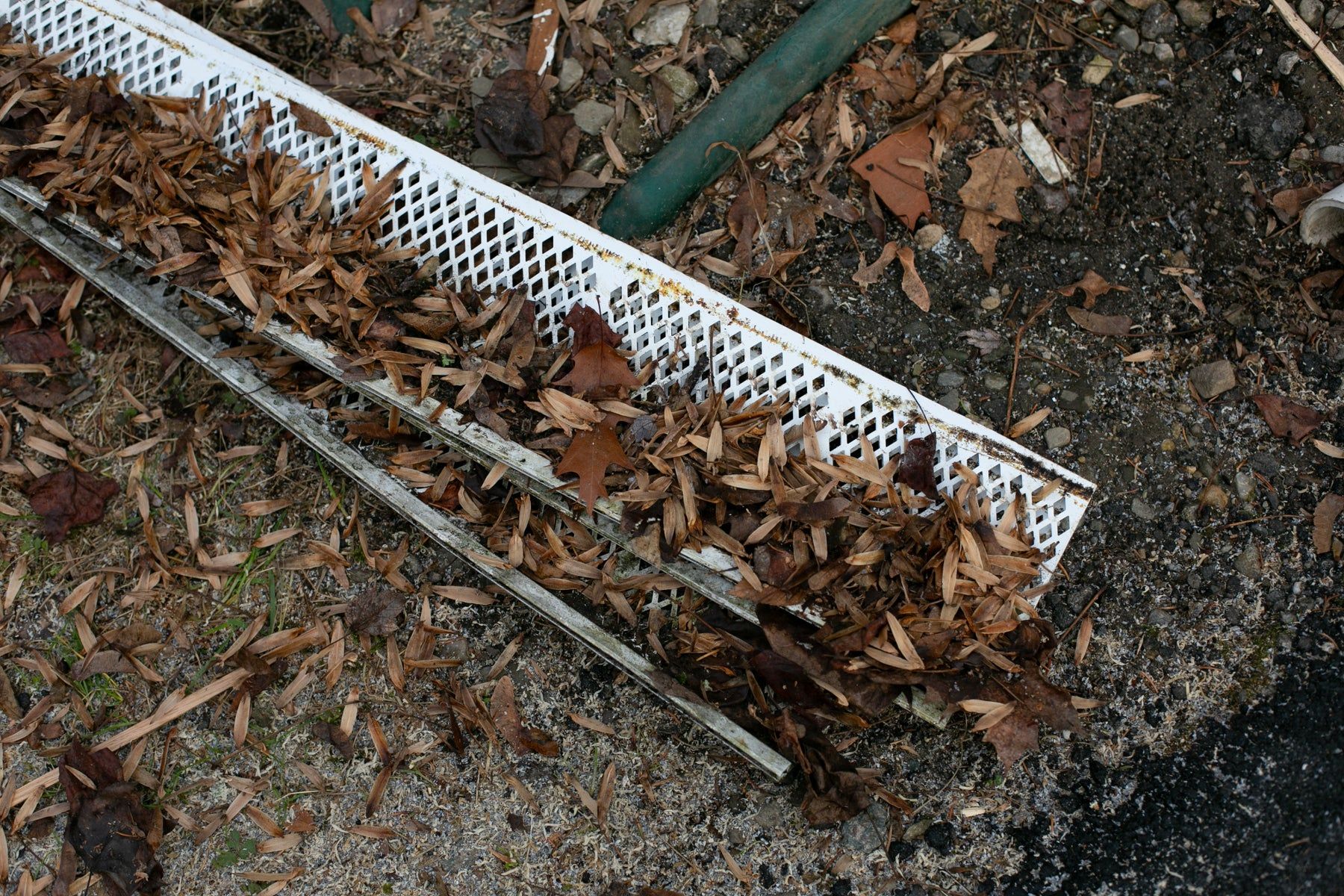
The Orange County Mosquito and Vector Control District is the public agency whose stated mission is to educate and protect Orange County from vectors and prevent vector-borne diseases. Its page on where to look and what to do is blunt about gutters: house rain gutters often get clogged with leaves, and that decaying vegetation will feed developing mosquito larvae.
The district’s mosquito source checklist goes further. It lists gutters, including covered types, and gives one instruction: clean them so that water runs freely. It treats any container holding water at least a quarter inch deep as a possible breeding site, and a gutter that dips between hangers holds more than that after every storm.
The district also says many mosquitoes breed in small backyard water sources and do not fly far from them. If you are getting bitten on your own patio in Irvine or Lake Forest, look up at the roofline too.
Two kinds of mosquito, two reasons to care
The district names two mosquito groups of concern to Orange County. Culex is a small brown mosquito active at dawn and dusk that lays egg rafts on organically rich, stagnant water, and the district lists ponds, green pools and gutters as common sources. The district says Culex can transmit West Nile virus, St. Louis encephalitis and Western equine encephalitis.
Aedes is black with white stripes, bites during the day and lays eggs along the sides of containers, and the district says those eggs can stay alive for years until water returns. The district notes the California Department of Public Health calls the risk of Zika transmission in California low, so this is about a comfortable yard, not panic.
What we find
Where water hides in a South County gutter system
A gutter should drain dry once the rain stops. When it does not, the reason is usually one of a handful of things.
South County gutters get a long dry season to fill up with eucalyptus and sycamore leaves, jacaranda blossoms, palm litter, pine needles and grit, and near the coast marine layer mornings keep that layer damp. Then most of the rain arrives in a few concentrated storms. Any low spot fills, and in a clogged trough the water sits on rotting leaves, the food the district warns about.
| Where the water sits | Why it stays there | Usual fix |
|---|---|---|
| The middle of a long run | A hanger has pulled loose or corroded and the run sags between supports | Rehang the run on new hangers with a steady slope to the outlet |
| The wrong end of a run | The gutter was hung level or has a back pitch away from the downspout | Re-pitch the run toward its outlet |
| The trough above a downspout | Leaves and grit packed into the first elbow, so water backs up | Clear the elbow and flush the downspout until water runs out the bottom |
| A mat of wet leaves along the trough | Leaves hold water like a sponge long after the storm | Hand cleaning, then a guard if the trees keep refilling it |
| Under old plastic or foam inserts | Debris works into or under the insert and it clogs or warps | Pull the insert, clean the trough and switch to an all metal guard |
| On the ground at the outlet | The downspout empties into a low spot that never drains | Downspout extensions and redirects to ground that slopes away |
Why a sag is worse than a clog
A clog gets cleared on the next cleaning. A sag keeps holding water no matter how clean the trough is, because the shape of the gutter is the problem. Near the coast the marine layer and salt air work on hangers and screws until a run starts to drop, and inland plenty of original gutters are now old enough to sag at the hangers or pull away from soft wood. By the time you can see a sag from the driveway, that run has usually been holding water for a while.
Do it yourself
How to check your gutters for standing water
You do not need to climb onto the roof to find out whether your gutters hold water. Most of the clues are visible from the ground.
Start from the ground. Most South County roofs are concrete or clay tile, and tile can crack under a boot, so leave walking the roof to a crew that does it every day.
- Look the day after a storm.Drips from the middle of a run, a corner still trickling long after the rain, or fresh staining on the stucco below point to water that is not leaving the gutter.
- Sight down each run.Stand at one end and look along the bottom edge. A dip between hangers or a run that rises toward the downspout shows up against the roofline.
- Run a hose test.Put a garden hose in the high end of a run and let it flow. The water should travel to the outlet and leave nothing behind. Water still standing after a flush means a sagging run or a loose hanger.
- Check the bottom of every downspout.Water should come out quickly. A weak trickle, or water spilling over the gutter while the hose runs, means a packed elbow.
- Walk to where the water lands.If a downspout empties into a puddle that is still there days later, the ground at the outlet is holding water too.
Check the rest of the yard while you are out there
The district’s checklist also covers plant saucers, bird baths, buckets, tarps and kiddie pools, and says to remove the water or check weekly all year long. If your downspouts tie into yard drains, see its page on keeping mosquitoes out of yard drains.
Getting it to drain
Fixing a gutter that holds water
The goal is simple: every drop that lands in the gutter leaves through a downspout and keeps going until it reaches ground that drains.
Most standing water comes out with a proper gutter cleaning. Our crews clear the troughs by hand and flush every downspout to prove it drains. If the flush leaves water behind, the shape of the gutter is wrong, and the fix moves to gutter repair.
That usually means resetting a sagging run on new hangers with a steady fall, replacing corroded hangers and resealing leaking seams and end caps. When a system leaks at several seams and sags between hangers, replacing it usually costs less than patching it every year, so we form new seamless gutters on site, sized to the roof and hung to slope toward each downspout.
- Every run slopes steadily toward an outlet, with no dips or back pitch.
- No water left standing in the trough after a hose test.
- Downspout elbows clear and flowing at the top and the bottom.
- Hangers tight in solid wood, with corroded ones replaced.
- Seams and end caps sealed so water stays in the trough.
- Downspout extensions and redirects sending water to ground that slopes away.
Where the water goes after the downspout
A downspout that empties into a low spot by the slab just moves the puddle. An elbow at the bottom should turn water away from the foundation, and an extension or redirect carries it to ground that drains. On sloped lots in Laguna Niguel and Mission Viejo we keep roof water off walks and slopes, and every outlet is planned with you before work starts.
Guards and mosquitoes
Do gutter guards stop mosquitoes?
They help a lot, as long as you know what a guard can and cannot do.
A metal mesh guard keeps leaves, needles and blossoms on top of the gutter instead of inside it. That means far less wet debris in the trough, fewer clogs and less of the rotting material the district says feeds larvae. A covered gutter also keeps birds and other small animals from nesting in the trough. That is why we install BroGuard stainless micro-mesh on homes under eucalyptus, sycamore and pine across South County.
Two cautions. First, a guard cannot fix a gutter that sags or slopes the wrong way. Water still collects in the low spot under the mesh, so we clean, flush and repair the system before any guard goes on. Second, the district’s checklist names covered gutters too. No guard is maintenance free, and a light check now and then keeps the surface clear and the downspouts flowing. Our gutter maintenance program schedules visits to rinse guards and check downspouts, timed around the fall winds and the winter rains.
Old plastic or foam inserts can clog or warp and hold wet debris. Our gutter guards guide explains what to look for in a guard on tile roofs. And if you keep a rain barrel, the district says to cover collected rainwater with fine mesh screen.
Not sure whether your gutters are holding water? A Solutionist will hose test every run and show you what we find. Call (949) 994-4410
Get a Free QuoteLocal tip: the morning after the next real storm, walk around the house before the sun dries things out. Any gutter still dripping or puddle still sitting at an outlet is the spot to show us at the estimate.
Frequently Asked Questions
Yes. The Orange County Mosquito and Vector Control District says house rain gutters often clog with leaves, and that the decaying vegetation feeds developing mosquito larvae. It lists gutters among the common breeding sources for Culex mosquitoes. A gutter that sags, is pitched the wrong way or has a packed downspout can hold that water for days after a storm.
Very little. The district’s mosquito source checklist treats any container that can hold water at least a quarter inch deep as a possible breeding site. A dip in the middle of a gutter run or a corner behind a packed elbow easily holds that much, which is why the checklist tells homeowners to clean gutters so that water runs freely.
A metal mesh guard keeps leaves out, so there is far less wet debris in the trough, and that cuts down on standing water. It does not fix a sag or a bad slope, and the district’s checklist says covered gutters still need to be kept so water runs freely. Put the guard on a gutter that is clean, pitched right and solidly hung, then check it now and then.
Not overnight. The district says eliminating water sources will not give immediate results, because adult mosquitoes already flying die off in about 10 days. What removing the water does is stop new larvae from coming up behind them. Clean the gutters, fix any spot that holds water, and keep checking the rest of the yard for standing water too.
Most homes do well with a fall cleaning before the rains and a spring visit after the jacaranda and sycamore drop. Homes under eucalyptus or pine may need a third visit. Every cleaning should end with each downspout flushed and the runs checked for water left standing, since a gutter that holds water after a rinse needs a repair, not just a cleaning.
Free quotes
Want gutters that drain dry, from Irvine to San Clemente?
Free, no-pressure written estimates from your local South County crew. Every run hose tested, sags and back pitch fixed, seamless gutters formed on site and downspouts sent to ground that drains.
The Brothers That Just Do Gutters · Irvine · (949) 994-4410 · Serving Irvine and South Orange County, from Newport Beach and Costa Mesa to Mission Viejo and San Clemente
Licensed & Bonded · California Contractor License #1145336